
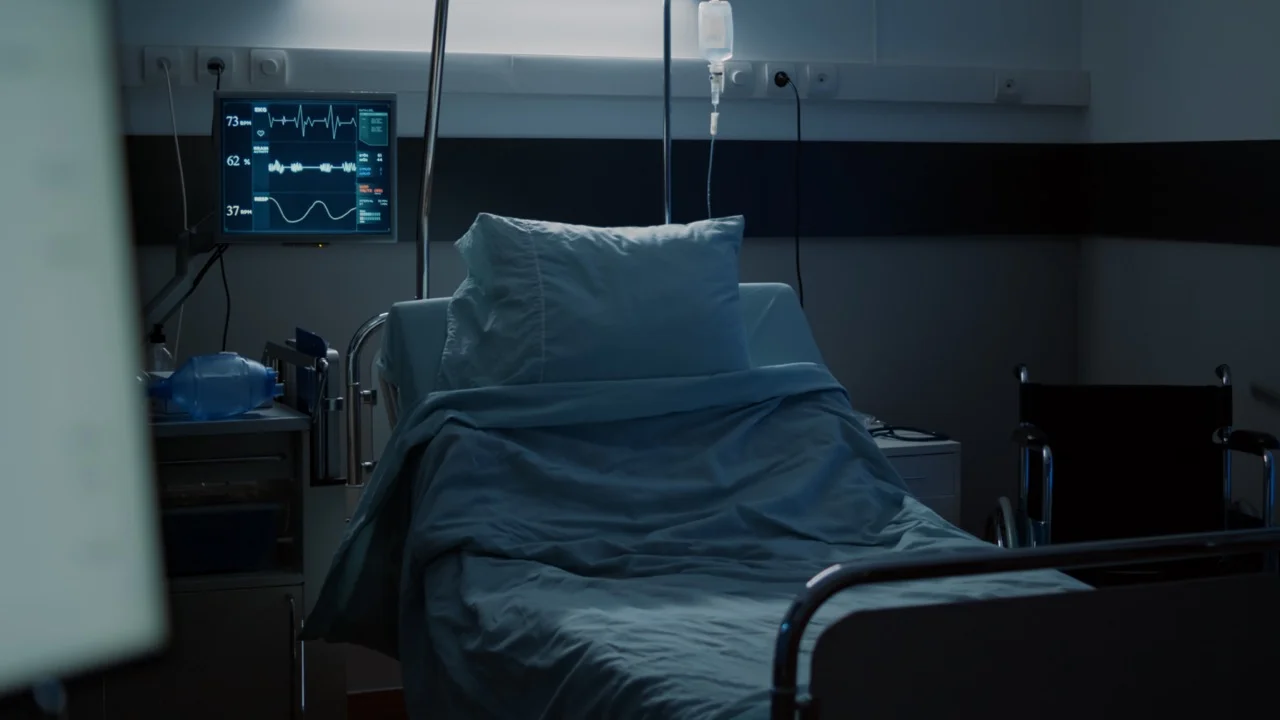
A full facility power outage is a meaningfully different scenario from an EHR-only outage, and it raises specific questions about what happens to the downtime workstations and the patient data they contain when power is lost. The answer depends on several factors related to the facility’s power infrastructure and the configuration of the downtime workstation deployment.
The UPS and Generator Infrastructure Question
The first factor that determines what happens to downtime workstations during a power outage is whether those workstations are on the facility’s uninterruptible power supply (UPS) and generator circuit. Most hospital-grade facilities have emergency power infrastructure that maintains power to critical clinical systems during a utility power failure: the UPS provides immediate bridge power while the generator starts, and the generator maintains power to designated circuits for the duration of the outage.
Whether the dbtech downtime workstations are on the emergency power circuit is a deployment decision that should be made deliberately during the initial implementation rather than discovered during an actual power event. The recommendation is clear: downtime workstations in clinical areas should be on the emergency power circuit, because a power outage that takes both the EHR and the downtime workstations offline simultaneously leaves clinical staff with no electronic access to patient information at the worst possible time.
Facilities that deploy dbtech workstations should confirm with their facilities management team during the implementation which circuits in each clinical area are on emergency power, and should ensure that the workstations are plugged into those circuits. This is a physical deployment decision, not a software configuration, and it requires coordination between the IT team managing the dbtech deployment and the facilities team managing the power infrastructure.
What Happens to the Data If Power Is Lost
If a downtime workstation loses power unexpectedly, the data on that workstation is protected through the same mechanisms that protect data on any computer during an unexpected shutdown: the operating system’s file system protection and the application’s data persistence model. dbtech’s downtime workstation software is designed to write patient data to persistent local storage rather than holding it only in volatile memory, which means that the patient data synchronized from the EHR before the power loss is recoverable when power is restored and the workstation reboots.
The practical implication is that when power is restored and the downtime workstation reboots, it will reload the patient data that was present at the time of the power loss rather than starting with an empty data store. Staff can resume using the workstation with the patient information that was current at the time power went out, without needing to wait for a new data sync from the EHR.
What is not automatically available after a power-loss reboot is any data that was in the process of being entered into the system at the exact moment power was lost. A form that was partially completed but not yet saved will not be recovered. This is the same behavior any software application exhibits during an unexpected power loss, and it reinforces the importance of staff saving or submitting forms as they complete sections rather than working through a long form in a single unsaved session.
The Scenario Where Both Power and EHR Are Unavailable
The most challenging scenario is one where the facility experiences a power outage that takes both the EHR and the downtime workstations offline simultaneously, and where the emergency power infrastructure either does not cover the downtime workstations or is itself affected by the power event. In this scenario, the organization has no electronic access to patient data until power is restored.
This scenario underscores the importance of maintaining printed downtime resources as a last-resort backup even in facilities with robust electronic downtime infrastructure. Most downtime preparedness experts recommend that facilities maintain a printed downtime binder in each clinical area that includes the most recent patient census, the basic medication reference information for current inpatients, and the critical patient safety information for the highest-acuity patients on the unit. This printed backup is not a substitute for the electronic downtime system, but it provides a last line of defense in the specific scenario where all electronic systems are simultaneously unavailable.
The printed binder should be updated at the start of each shift from the most recent EHR data while the system is running, so that the information it contains is as current as possible if it is ever needed. Many facilities integrate this practice into their charge nurse shift-start checklist as a standard procedure rather than treating it as an emergency preparation task. To discuss how dbtech’s workstation deployment can be configured to maximize availability during power events, contact our team or request a demo.